
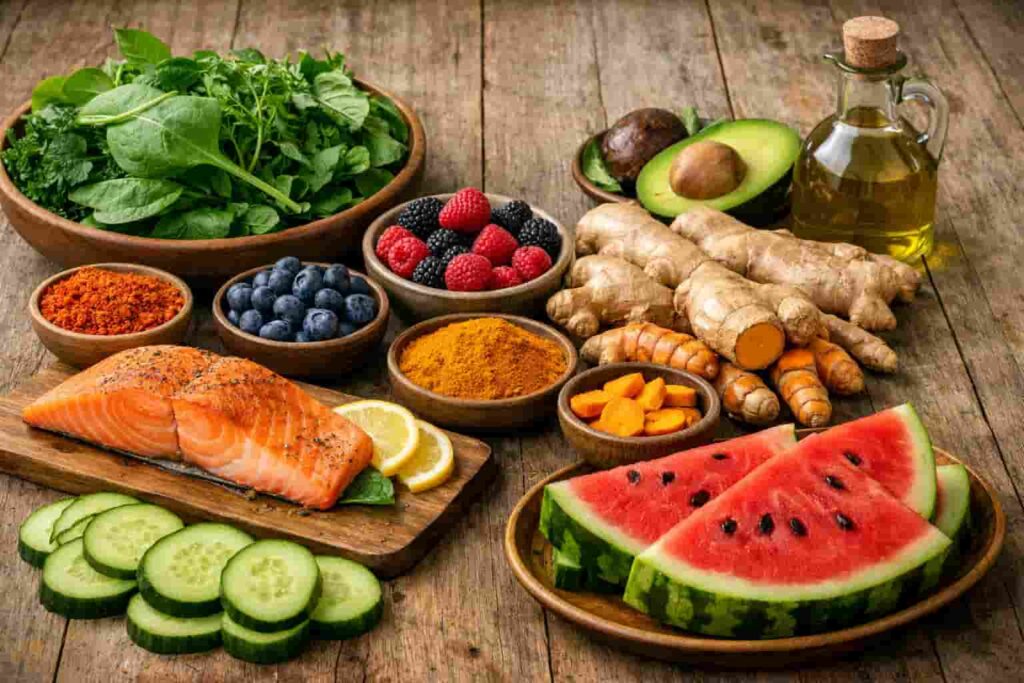
PCOS (Polycystic Ovary Syndrome) is commonly known as an inflammatory condition. Many women worldwide with PCOS often struggle with bloating and water retention on a daily basis; it is one of the most commonly seen symptoms among them. The constant active chronic low-grade inflammation affects gut health as well, causing indigestion, swelling, discomfort and even pain associated with bloating. It affects both physical comfort and body image. The good news is that this “PCOS Belly” can be managed by eating an anti-inflammatory and whole-food diet. Choose a low-glycemic-load diet, consume high-fibre foods (25-35g/day), low-fat dairy products, lean proteins and incorporate physical activity. Eat nutrient-dense foods that actually balance blood sugar levels and get rid of excess salts from the body. Following are 5 foods or food groups that can help reduce water retention in women struggling with PCOS worldwide.
Note: Always consult with a healthcare provider before making major dietary changes in your daily routine.
1. Spinach and Leafy Greens: Natural Bloat Relievers
Leafy Greens like spinach, kale, swiss chard are nutrient powerhouses for women with PCOS because they low in carbs and rich in potassium, fiber and magnesium. A lot of women with PCOS are deficient in Magnesium. Magnesium plays its role in over 300 chemical reactions in the body including fluid regulation and muscle relaxation. Potassium present in Green leafy vegetables also aid in fluid retention and also flushes out excess sodium from your body. Many studies show that magnesium helps reduce premenstrual water retention and bloating. Moreover, Johns Hopkins experts’ women with PCOS to take non-starchy vegetables either as salads or in big smoothies to have better fiber intake along with its anti-inflammatory properties for better blood sugar balance. The fiber and nutrients present in these green leafy vegetables help slow down glucose absorption in the blood. Many women experienced a big difference in their bloating over time by swapping high sugar foods and snacks and replacing them with leafy greens. Start gradually by filling half of your plate with spinach and tomatoes or sautéed kale instead of spinach.
2. Berries: Low-Glycemic, Anti-Oxidant Rich Snacks
Berries like strawberries, blackberries, raspberries, blueberries are not only hydrating, but they are also rich in antioxidants, high in fiber and relatively low sugar fruits. Other tart fruits like cranberries and mulberries are also a very safe and healthy choice in PCOS because they help in reducing bloating too. They become a sweet treat without unnecessarily spiking insulin. Other than the fiber, the antioxidants and phytochemicals present in them naturally help in reducing inflammation in the body. The fiber needed for the disturbed gut health can be obtained from the berries that can slow down sugar absorption in the blood. Try taking whole berries instead of juicing them with sugar, which removes the fiber needed. Add a cup of mixed whole berries either in your breakfast or as a midday healthy low-calorie snack daily.
3. Ginger and Turmeric: The Inflammation Fighter
Generally, spices or warm spices are not considered as foods, but they do have some properties too, like ginger and turmeric. Ginger and Turmeric are widely known for their anti-inflammatory properties and are also a great help to ease indigestion, which may help out to reduce bloating too. You might only know it as a yellow/golden spice for foods, but there is an active compound present in turmeric known as curcumin, till now there have been multiple studies done on curcumin in reducing low-grade inflammation in women with PCOS (hormonal imbalance). Curcumin has anti-inflammatory and antioxidant properties. Research on Harvard Health clearly shows that curcumin, present in turmeric, can improve digestive issues in general and reduce bloating. In terms of its safety, curcumin present in turmeric is considered safe when taken according to its therapeutic doses. Women with PCOS are often prescribed curcumin supplements by their physicians.
Ginger itself is very helpful for gut health and balancing hormones; it also works in accordance with curcumin as a strong therapeutic agent for PCOS. Ginger has active compounds present in it like gingerol, which helps in digestion and relaxes intestinal muscles, ultimately releasing trapped gases from the body. It also reduces silent inflammation, which is a common characteristic in PCOS. You can start taking ginger in the form of ginger tea or add a little turmeric into lentils, soups, or even make the famous therapeutic drink “golden milk”.
4. Fatty Fish: Rich in Omega-3 and Anti-Inflammatories
Healthy fats that are rich in Omega-3 and have anti-inflammatory properties are very important in managing PCOS. Fatty Fish like salmon, trout, sardines are high quality proteins rich in Omega-3 and have anti-inflammatory properties.
A comprehensive meta-analysis done in 2024 in Nutrients (PMC) that Omega-3 present in fatty fish showed better results then omega-3 present in plant sources like flaxseeds, etc. It clearly showed that Omega-3 present in marine sources had a much better capability of increasing an anti-inflammatory hormone that helps fight the silent low-grade chronic inflammation experienced in PCOS. One of the studies done by Dietitian Amanda Stathos, at John Hopkins Sibley Memorial Hospital, states that Omega-3s (EPA/DHA) can greatly help in easing systemic inflammation, which is a common symptom faced by women dealing with PCOS. Clinical Dietitians worldwide suggest Mediterranean diets, which consist of healthy fats (especially olive oil), nuts and seeds, lean proteins, whole grains, beans, lentils, lean poultry, daily intake of fruits and vegetables, while eliminating red meat, refined sugar and saturated fats from diet. This is a very strong approach for combating inflammation. Try taking fatty fish 2-3 times a week as part of a balanced diet.
5. Cucumber, Watermelon: Natural Diuretic Foods
According to Cleveland Clinic Dietitians, foods like cucumber, watermelon and celery are considered natural diuretic foods. These hydrating diuretic foods gently increase urine output, remove excess water from the body, and reduce bloating. The researches published in ResearchGate and SciSpace showed that cucumber extracts act similarly as diuretics because they help in excess water and sodium secretion from body. This often helps in reducing the bloating or “puffiness” caused in PCOS. Try taking celery or cucumber sticks or cubed watermelon atleast once day. There are other foods present in this diuretics list such as lemon, pineapple, asparagus and even grapes. Try taking whole vegetables or fruits that are not only hydrating but also low in sodium. Add them in your salad bowls or soup bowls and enjoy!!
Well Explained